Carlos
My Tender MatadorCarlos is a young clandestine member of the Manuel Rodríguez Patriotic Front whose political work becomes intertwined with the Queen of the Corner’s home and her unreturned love for him. He arrives under an assumed name, asks her to shelter boxes and host meetings, and eventually trusts her with more of the danger surrounding their work. Yet he continues to manage what she knows and does not share her romantic hopes: their relationship moves between practical reliance, genuine affection, and a painful imbalance that becomes clear when she must leave Santiago.
Identity and Introduction
Carlos first appears at a neighborhood store, where he asks the Queen of the Corner to keep several heavy boxes. He calls their contents censored books and flashes an identity card so quickly that she cannot read it. Captivated by his appearance and manner, she does not press him for details. She helps him bring the first boxes into her bedroom and arranges them around the house, at once making room for his request and imagining a closeness that he has not promised.
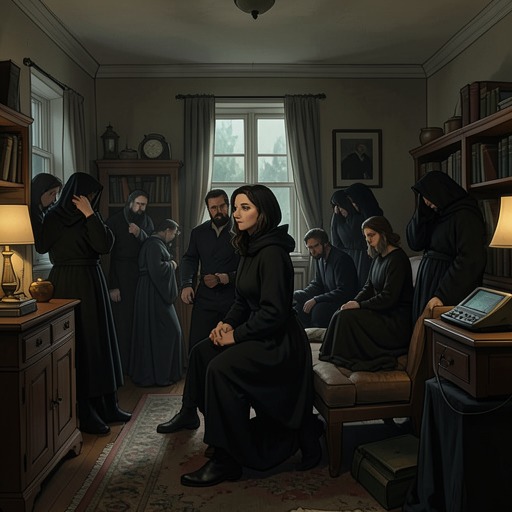
More boxes follow, and Carlos asks whether his university friends can meet at her home because they have nowhere else to study. She agrees, serving coffee while the young people gather in the room on the roof. The meetings continue at midnight and at dawn, while the neighborhood sleeps. The Queen hears the political news when the visitors turn on Radio Cooperativa, but at first she understands little of what is taking place; Carlos has presented the meetings as study and has offered her only a safe, limited explanation.
The name Carlos is itself part of that limitation. When he later admits that it is an alias, he explains that the Front uses different names to operate clandestinely. He confirms that he belongs to the Manuel Rodríguez Patriotic Front and says that he has kept her from learning more because additional information would endanger her. His disclosure changes the meaning of the boxes, the meetings, and her household: what she had treated as a favor to a young man has made her home part of an underground network.
Work and Political Danger
Carlos’s political activity is first visible to the Queen through its practical traces: repeated deliveries, meetings in her rooftop room, and young visitors who come and go. The boxes are eventually carried out by Laura and two other young people while Carlos is absent. The Queen finds an identity card among the scattered cushions but chooses not to examine it, preferring not to test the suspicions raised by the boxes and the gatherings. She later keeps the card, a decision that gives Carlos an opening to explain his alias when he returns.
His work also brings the Queen into direct contact with the risks faced by the Front. During a demonstration, she carries a package for Carlos through tear gas and a police assault, loses it briefly beneath the seats of a bus, recovers it, and delivers it to a man waiting by the designated store. She passes through the police line by insisting that she is going shopping. The package’s contents are not identified in that scene, but Carlos’s relief at her eventual cooperation and the surrounding danger establish that the errand is more than an ordinary delivery.
Afterward, when Carlos comes for the remaining boxes and a metal cylinder, the Queen confronts him about what she has understood. He says the cylinder is part of their dangerous work and acknowledges that she is involved with them, while maintaining that it would be unsafe for her to know more. He offers to tell her what he can and asks that they use a secret phrase if they ever need to communicate clandestinely. Their shared code makes their cooperation more intimate, but it does not erase the secrecy that structures it: Carlos still decides which facts she can safely receive.
The danger grows sharply after the armed ambush on Pinochet’s motorcade. The Queen imagines Carlos amid the attack, seeing his hands on a weapon and calling out warnings to him from her seat in a cinema. This is her vision of him rather than a reliable account of where he is during the action. Later, Carlos appears safe but says little about how he escaped; when the Queen calls the action an attack, he corrects her by calling it an ambush. He does not give her a full account, reinforcing the gap between her emotional involvement and her access to the operation’s details.
The Queen and Carlos
The Queen’s love develops through the everyday pattern of Carlos’s visits. She stays awake while the meetings continue, makes him coffee, arranges cushions for his comfort, and listens as he talks about himself. She tells him fragments of a childhood marked by her mother’s death, her father’s rejection of her femininity, and the hardships of surviving through street hustling. Carlos’s request to hear about her life gives her a chance to speak, but it does not become a promise of romantic reciprocity.
Their affection is expressed through small gestures and familiar language. Carlos compliments her, returns to the house, and sometimes treats her with consideration; she experiences these attentions as evidence of a deeper bond. After she helps him, he proposes an arrow and bow as a birthday gift, and later invents their secret phrase. Such moments allow her to imagine a private love story within the political one. The narrative repeatedly sets that imagined intimacy beside Carlos’s practical requests, leaving the reader to see how care and reliance can coexist with unequal expectations.
The Queen’s friends, especially Rana, question her attachment and warn her about the difference between Carlos’s attention and the love she hopes to receive. Carlos himself begins to recognize that he may have involved her without her permission. In the car after a visit to Rana’s house, he says it has been wonderful to know her and raises the possibility that he has hurt her. The Queen hears this as a farewell, becomes angry, and leaves the car. Once inside her home, her anger gives way to the fear that Rana and Carlos may be right: that his kindness and gratitude have sustained a hope he cannot fulfill.
Flight and Farewell
As military searches spread through Santiago after the ambush, the Front’s network faces immediate danger. Laura contacts the Queen and warns her that the other safe houses have been searched and that hers is likely to be next. She is told to leave the city because the secret police may arrive within hours. The Queen protests that she cannot simply abandon her home, but Laura insists that leaving is a matter of life and death for everyone involved. Carlos does not come to collect her; Laura says that he is safe, but cannot meet her then.
The Queen is still permitted a final meeting with Carlos in Viña del Mar. They leave the café because he suspects it is watched, travel by taxi toward Valparaíso, and continue on to Laguna Verde. Their conversation makes the limits of their relationship explicit. Carlos gives her money from the Front for lodging and expenses, explaining that she will need it until she can return to Santiago. She resents the timing, hearing the offer as a payment for what she has done; he insists that it is support, not a fee, and says he will not forget her. She asks for their private phrase, “My tender matador,” as the return she wants from him.
Carlos then offers to take her to Cuba. He says he is leaving the next day and can still obtain a ticket, presenting the journey as part of the plan to save her. The Queen is moved by the invitation but refuses to mistake escape for a shared future. She says that their two stories barely met amid everything that happened and that what could not happen between them in Chile will not happen anywhere else. She acknowledges that she fell in love and that he allowed himself to be loved, while recognizing that his silence has already given her an answer. When she also says that the ambush was her failure, the conversation joins her private heartbreak to the political action that has brought them together.
The book leaves Carlos and the Queen on the way back from the beach, with the Queen having agreed to leave Santiago but having lied when asked whether she had gathered all her belongings. The embroidered tablecloth remains behind on the sand as the tide advances. Carlos has offered protection and a possible route to Cuba, but not the romantic future she longs for. His significance rests in that unresolved conjunction: he is at once a revolutionary who relies on her courage, a careful keeper of political secrets, and the young man around whom she builds a love story he cannot return.